
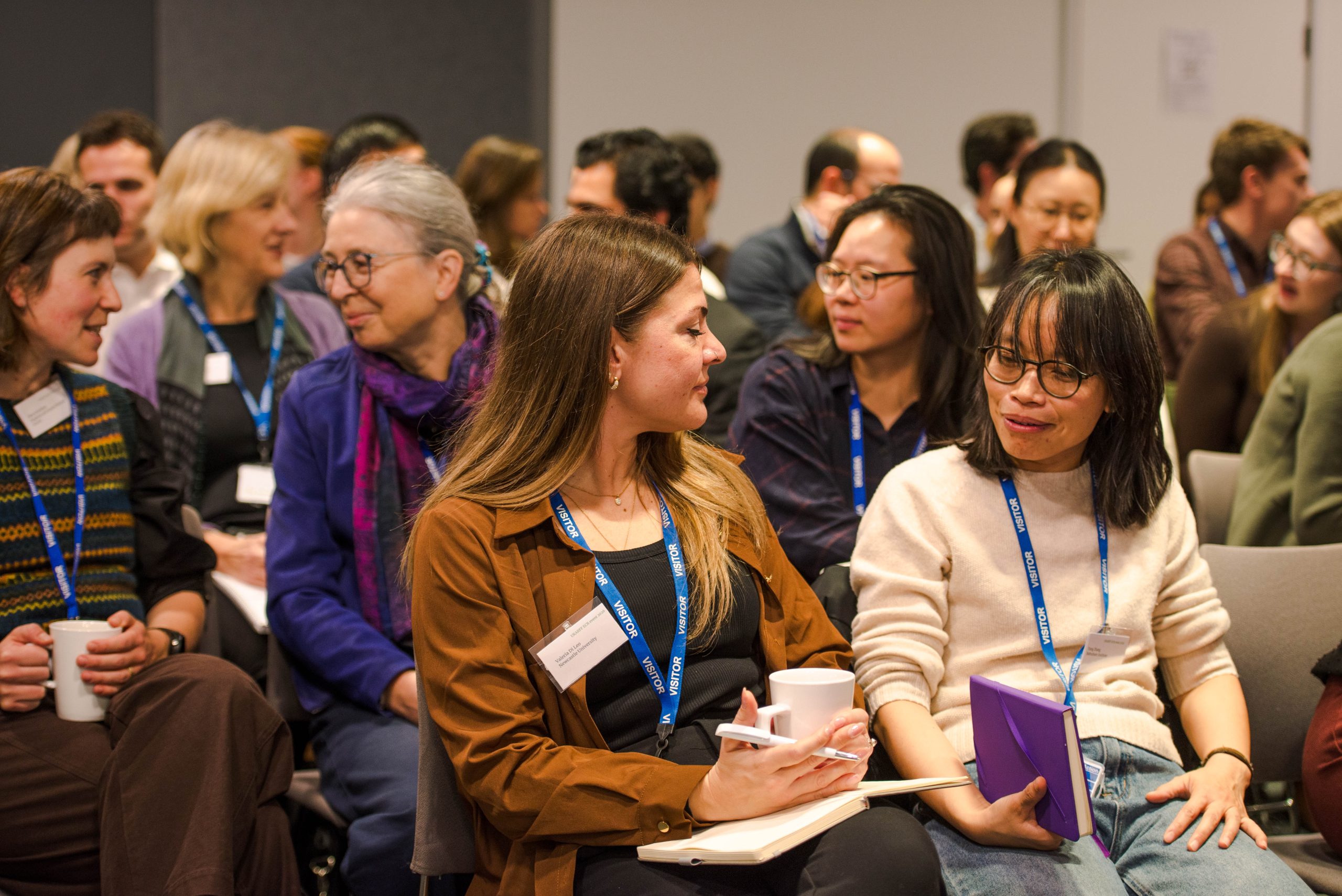
On 23 November 2026 we hosted our 2026 UK Ageing Research Funders’ Forum (UKARFF) Early Career Researchers’ (ECR) event at the Health Foundation in Central London. Supported by the Biotechnology and Biological Sciences Research Council (BBSRC), Economic and Social Research Council (ESRC) and the Macular Society, we brought together ECRs working across the ageing field.
After starting the morning with refreshments, we headed into the auditorium for an introduction and welcome from Sadhana Sharma from BBSRC.
A panel of research funders
Our Director of Research, Sanjay Thakrar, chaired the first session – a panel discussion with the following representatives from UKARFF:
- Anbu Paramasivam, Research Programme Manager – Prevention & Population Research, Cancer Research UK
- Cherie Nyota, Senior Grants Manager, Alzheimer’s Society
- Jo Haney, Senior Portfolio Manager, BBSRC
- Lauren Gill, Research Inclusion Manager, National Institute for Health and Care Research (NIHR)
- Michael Thor, Research Programme Manager, Arthritis UK
- Sophie Sayers, Programme Manager, Medical Research Council
It was a lively discussion, covering topics such as how to make your funding application stand out, how to demonstrate you are ready to lead an independent project, how to incorporate equity, diversity and inclusion (EDI) into your proposals, as well as funding priorities for 2027 and beyond. The session sparked a lot of interesting questions from the audience too, including ‘what would turn a proposal from a maybe to a no?’ and ‘what are your thoughts on having to move institutions to demonstrate your independence?’
It was reassuring to hear about the support on offer for early career researchers beyond the awards themselves– from being given the opportunity to observe funding committee meetings and attend training and networking events, to having access to resources, mentors and coaching. Some funders offer pre-application support funds too, and pay open access and conference fees.
Anbu Paramasivam said:
Know your funder. Copying and pasting the same application to many funders is a wasted opportunity. Always see what their strategic priorities are, and nuance your application. Highlight how many strategic areas your proposal will fit. It’s a very competitive environment, so it’s important you’re putting your strongest foot forward.
Here are – in no particular order – some key takeaways from the panel:
- It’s not just the research proposal funders look at, it’s YOU as a researcher
- Articulate how your research can be translated into public and patient benefit down the line
- Develop your lay proposal with people with lived experience
- Demonstrate research independence beyond publications – show ownership, leadership and progression
- Show where you’ve been influential in your field – have you organised an event or workshop to shape the conversation? Have you brought departments together?
- Make sure Patient and Public Involvement and Engagement (PPIE) activities are meaningful and not tokenistic, and properly costed
- Ask a peer to read and sense check your application
- Be ambitious but realistic – don’t overpromise and underdeliver
- Make sure you include mitigation strategies
- Have the right support team around you
- Think about the balance between your science and career development – how can you put yourself in a stronger position?
- You don’t need to move institutions to step out of the shadows of your supervisor – forge your own network.
The panel session was incredibly informative, and there was a warm spirit of honesty, sharing knowledge and offering support. We hope the ECRs in the audience came away with some additional knowledge, a new way of looking at things or an action plan to work on.
Research showcase speakers
Following a refreshments break, which was a great chance to network and peruse the posters, Aleksandar Marinov from Heriot-Watt University introduced our first four research showcase speakers.
First up was Theresa Pankhurst from the Babraham Institute. She talked about understanding mRNA vaccine responses in ageing to inform improved vaccine design.
Next was Claire Hill from Queen’s University Belfast, who is funded by the Vivensa Foundation. Claire presented on sex chromosome loss in diabetic kidney disease.
Eleanor Conole from the University of Oxford took to the stage next. Her talk was about neuroepigenetics – characterising heterogeneity in brain and cognitive ageing.
And last but certainly not least was Ajmal Roshan from the University of Bristol. He spoke about his work on a Central Pattern Generator (CPG) exosuit controller for people after stroke.
The lunch break gave delegates a further chance to network and look at the posters. There was also a short optional lunchtime session – an Introduction to the ICURe Engage Programme with Rosy Jones from SETsquared partnership.
After lunch, Antonia Henne from the Babraham Institute introduced our next set of speakers:
First up was Emily Jones from the Quadram Institute. Her presentation was on hormones, host response and fungal virulence: a human vaginal microphysiological platform for studying candidiasis across the female lifespan.
Next was Chris Hardy from University College London. He spoke about listening for dementia: auditory cognitive biomarkers for earlier, fairer diagnosis.
Zsofia Szekeres from Cardiff Metropolitan University was up next. She presented on her Active Lives, Agile Minds project: Co-production and pilot evaluation of a mixed martial arts programme for older adults.
Finally, Lucy Beishon from the University of Leeds, who was funded by the Vivensa Foundation and is now funded by NIHR. She talked about a linked data study looking at high levels of frailty, physical health comorbidity, and poor health outcomes amongst older people receiving secondary mental and physical healthcare in the UK.
Keynote speaker
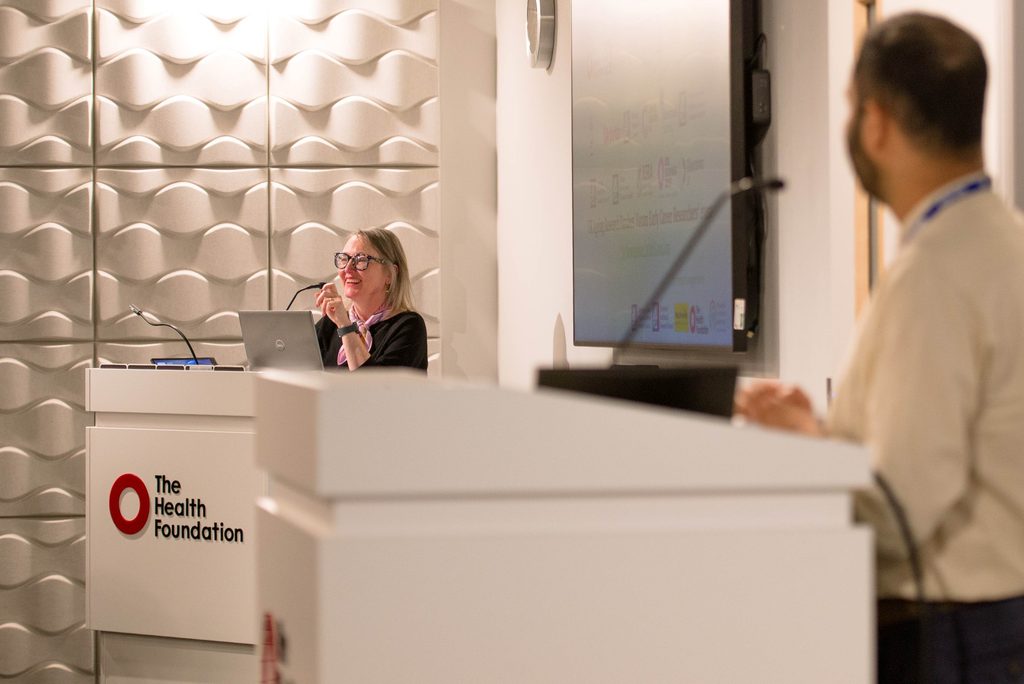
Following another refreshment break and taking us into the final section of the day, Sanjay Thakrar welcomed our keynote speaker, Professor Vicki Goodwin MBE from the University of Exeter. Vicki’s talk was aligned to the Chief Medical Officer for England’s Statement of Intent focused on integrating older adults into health and care research.
Coming from a socioeconomically disadvantaged background with no career information, no role models and no networks, Vicki is big on inclusion. She shared her inspiring story of how she got to where she is today and reminded the audience: “If you can see it and believe it, you can be it.”
Vicki suggested that ECRs do some training on research inclusion because it is fundamental to everything you do. She noted, “You should be doing PPIE on autopilot, and doing it well.”
Here are some key points from her talk:
- Rejection makes you stronger. There are so many fluctuations in funding success, so you need to be stubborn, flexible and resilient.
- Surround yourself with the right people. Make sure you have advocates and mentors, and people with different ways of thinking.
- Capitalise on every opportunity. Be bold, be brave, park imposter syndrome and put yourself forward for things out of your comfort zone. The worst that can happen is someone says no!
- It’s not all about research skills. Join committees, do some teaching, support others, attend networking opportunities.
- Access resources. There are some great resources out there to help you, such as the Trialforge website which has guidelines on a number of useful topics.
- Don’t mistake qualitative research with PPIE. There is a difference between PPIE and participation, and tailor it to the group you are working with.
- Be realistic about what you can achieve. Don’t over-promise on PPIE. Use the guidelines to cost it properly.
- Reach out to networks. Don’t be afraid to reach out to local/national networks and community leaders. Try to build personal connections and trusted relationships.
Prizes and closing remarks
Jo Hanney from BBSRC closed the day with a round-up, and teamed up with Cherie Nyota from Alzheimer’s Society to announce the winners of the poster and talk prizes.
Congratulations to the following winners who won funds to present their work at a conference relevant to their research:
- Claire Hill who won £700 for her first place talk
- Emily Jones who won £350 for her second place talk
- Parastoo Zali who won £300 for her first place poster
- Vignesh Radhakrishnan who won £150 for his second place poster
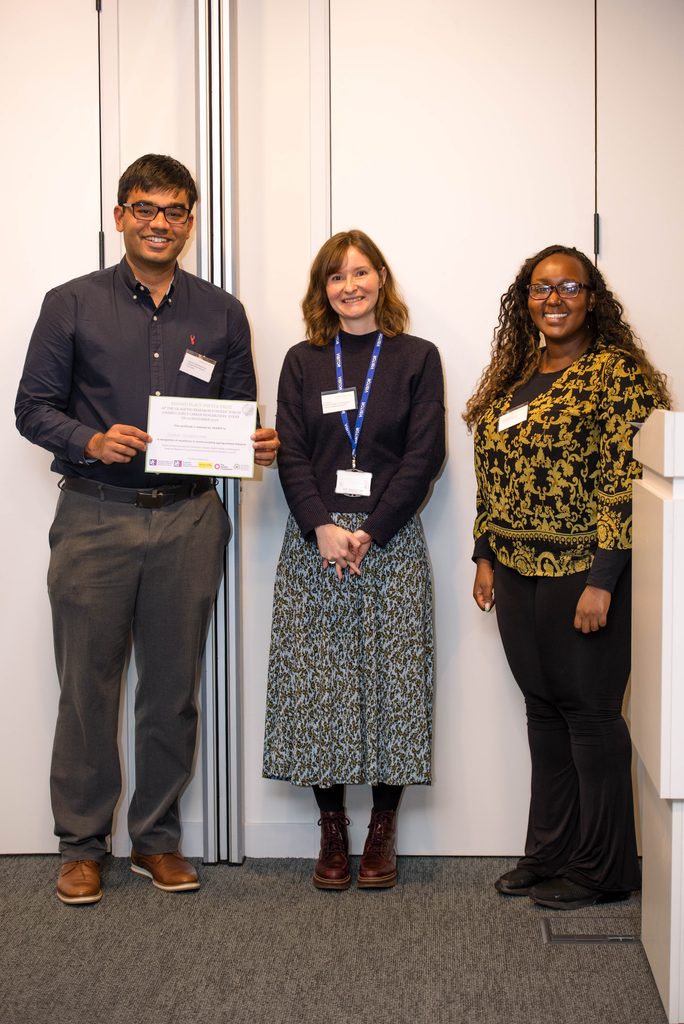
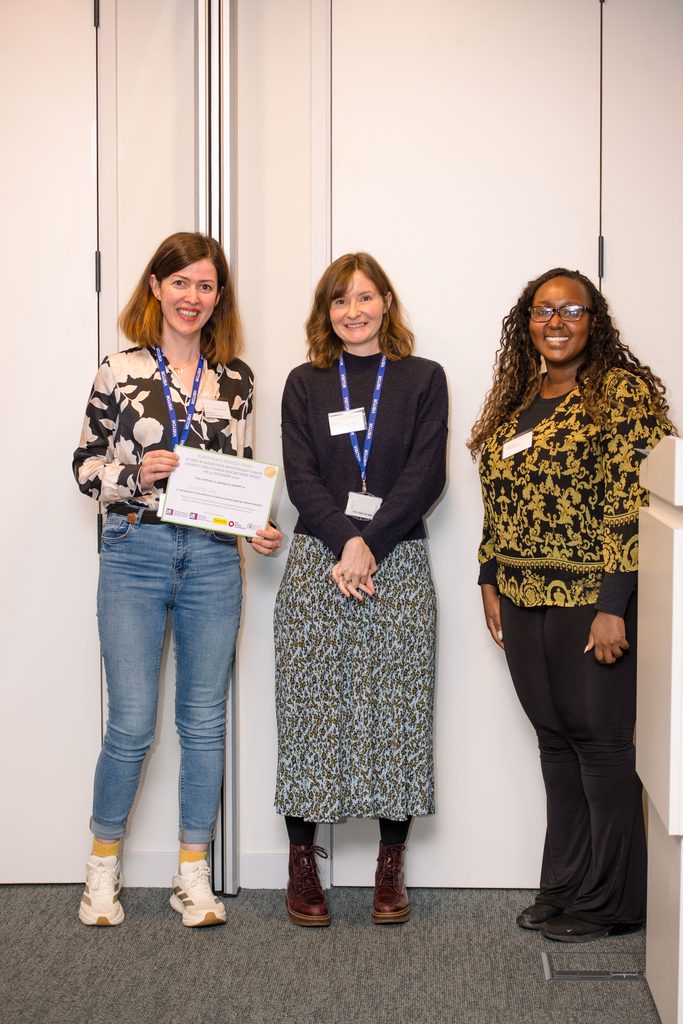
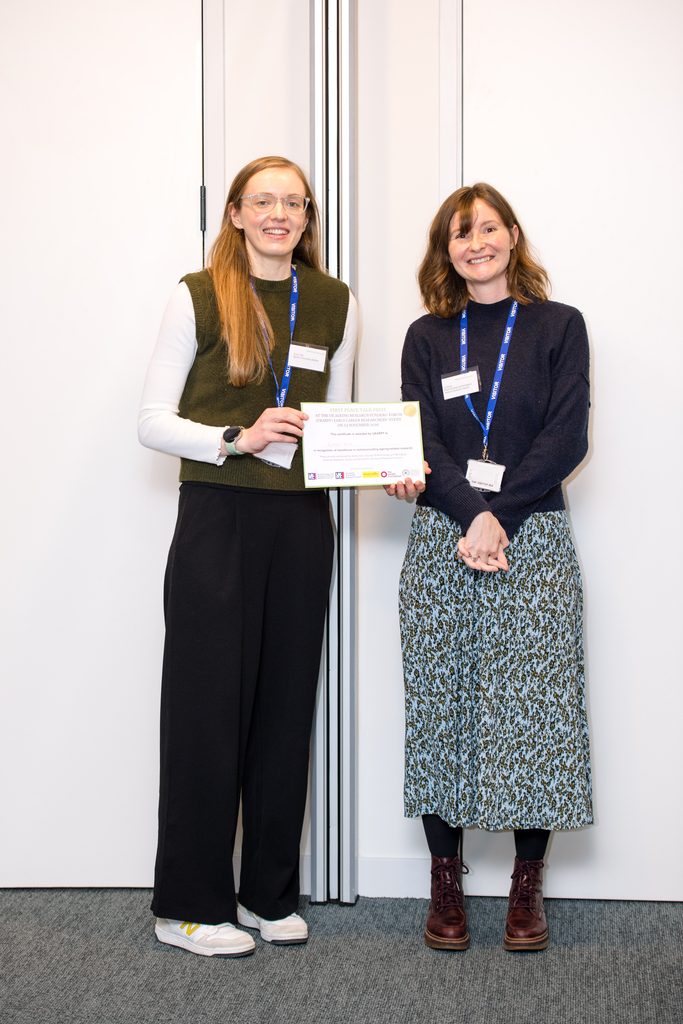
Thank you to our judging panels for the talks: Oli Soutar (Vivensa Foundation), Jo Haney (BBSRC), Justine Karpusheff (The Health Foundation) and Vicki Goodwin (University of Exeter).
Thank you to our judging panels for the posters: Sara Purdy (Vivensa Foundation), Lauren Gill (NIHR), Bradley Elliot (BSRA), Ralph Holme (RNID), Deborah Dunn Walters (University of Surrey / Vivensa Foundation), Joanne Hodgkinson (Glaucoma UK), Rachel Carey (Zinc), Sarah Mistry (BGS) and Louise Moore (Marie Curie).
The ECR event closed with a networking reception, where more thoughts and ideas were shared and future collaborations seeded.
________________________________________
Click here to view a selection of photos from the day, taken by FilmFolk.