We talk to the winners of the new ‘Team Achievement’ category in our annual Vivensa Academy Excellence Awards – the Manchester Urban Ageing Research Group (MUARG). Here, members share their approach to co-production, plans for their 10th anniversary celebration and their hopes for the future of the research group.
The Manchester Urban Ageing Research Group (MUARG) at the University of Manchester – led by Professor Tine Buffel – brings together researchers from a wide variety of disciplinary backgrounds to examine the interplay between population ageing and urban change. Tine says: “MUARG has always been about bringing people together across disciplines, communities, policy and sectors. We work towards a shared goal of co-producing research and action to improve the experience of ageing and address inequalities in urban environments.”
Tine was delighted to receive the Team Achievement award, and sees it as recognition of a collective journey. She explains: “The award made me want to contact every single person who has been involved in our work over the years – in all our projects and co-production activities – to say ‘this is because of your involvement.’”
MUARG Member Paul McGarry, Head of the Greater Manchester Ageing Hub and Assistant Director, Public Service Reform, Greater Manchester Combined Authority, was one of the team representatives who met the award panel. Paul says: “Working with MUARG reflects the kind of ecosystem we’ve been building in Greater Manchester over many years – bringing together research, policy, and the lived experience of older people to improve how people age in place. Winning this award feels like a recognition of our shared commitment to co-creating age-friendly communities, and will strengthen the foundations we need to take this work to the next level, in Greater Manchester and beyond.”
Research driven by older people
Another member of the team who met the award panel is MUARG’s longstanding co-researcher, Elaine Unegbu. Elaine is Chair of the Greater Manchester Older People’s Network and Age Friendly Manchester Older People’s Board. She is also a member of MUARG’s Older People’s Forum, a diverse group of residents from across Greater Manchester, who play a central role in shaping the group’s research priorities and activities. Elaine says: “The university used to look like a citadel. Only those who were privileged could go in. But I was brought in as a co-researcher and acquired a lot of knowledge. I felt an ownership of the work because I was part of it. Being part of research that can help towards better ageing in place is really positive. We’re seeing results in our local area.”
Niamh Kavanagh, an urban sociologist and researcher in the Department of Architecture at The University of Manchester, has been heavily involved in MUARG’s work. She was part of the team that met the award panel and accepted the award at our Annual Symposium. Niamh says: “MUARG is so much more than a research group, it’s a haven of experience, support and diverse perspectives. Doing truly engaged, collaborative research on the ground is not easy, and having the group as a sounding board has been invaluable – helping us to stay grounded and reflective in our work. Winning this award is such a powerful testament to that collective effort, and will be key for us to continue engaging with diverse older communities in meaningful, embedded and creative ways.”
Celebrating 10 years of MUARG
It’s certainly a time of celebration for the research group. Just days after being handed the Team Achievement award at our Annual Symposium, they are hosting an event to celebrate MUARG’s 10th anniversary. The interactive event will take place on Tuesday 28 April in Manchester and will showcase a range of creative methods that they use as part of their co-production work.
They will also launch a collective publication on co-production methods at the event. Collaborative Research for Ageing in Place: Stories of Co-Production in Practice brings together 18 different MUARG projects – from collaborative documentary making with older people and co-creating a comic book with older refugees and asylum seekers, to co-designing age-friendly neighbourhoods and producing arts-based interventions including films, exhibitions, and zines.
Each project tells a story about partnership: of building trust, experimenting with new ways of working, navigating challenges, adapting to context, and realising the potential of collaboration. Tine says: “With this book, we want to share what we have learned about doing co-production work in communities that are labelled as underserved or shaped by inequality. That’s what we hope to build on in the future.”
Investing in people and community
Tine sees the Vivensa Academy Excellence Award as a stepping stone. She hopes that MUARG will be able to transition from a research group to an international centre of excellence on urban ageing. The award funding will allow them to support existing partnerships, but also to invest in the people and leadership needed to take those next steps.
They plan to use the funding in three areas: co-production and community leadership; knowledge exchange and policy engagement; and team culture, mentoring and capacity building.
Tine explains: “At least half of the funds will go to supporting community leadership and co-production – resourcing our Older People’s Forum, for example. Offering paid roles for older people as co-researchers and community-led work is so important to build those relationships of trust in areas that have faced decades of underinvestment.”
Partnerships produce better research
Tine points out that collaborative working isn’t always easy. It’s something that requires continuous attention, energy and investment in partnerships and bringing people together. It takes time, patience, humility and a commitment to creating trust and building relationships. Having committed people on board is key. Tine elaborates: “Our work is built on the trusted partnerships we’ve developed with community organisations, local and regional policy, and older people over many years. It’s because of those relationships that we can co-produce research that makes a real difference to people’s lives.”
_______________________
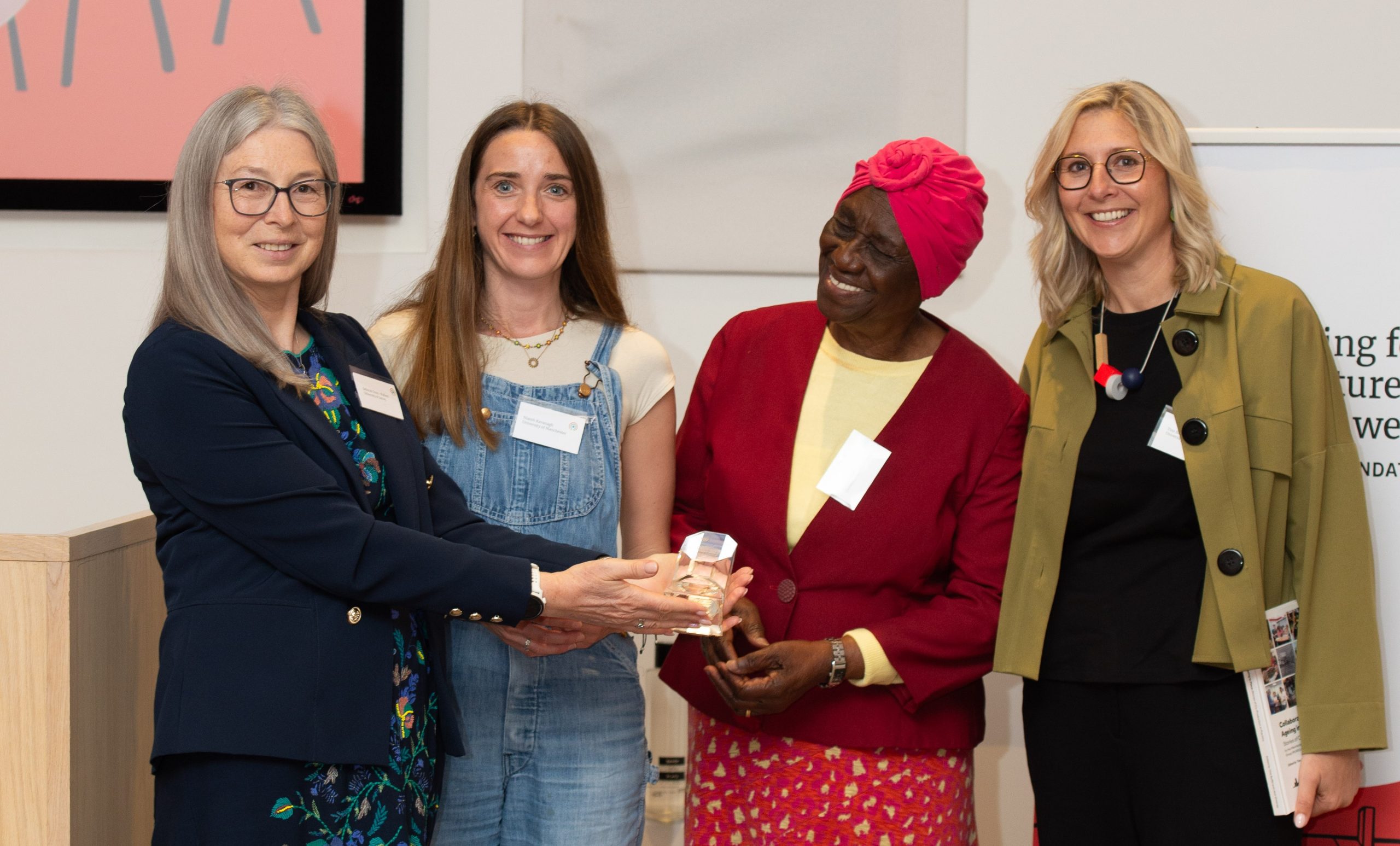
Photo L-R: Deborah Dunn-Walters; Niamh Kavanagh, Elaine Unegbu, Tine Buffel
Read MUARG’s publication here: Collaborative Research for Ageing in Place: Stories of Co-Production in Practice.
Nominate: Do you know a multidisciplinary team working in ageing‑related work that deserves recognition? Our 2027 Excellence Awards will open in September 2026. Members of Vivensa Academy can self-nominate or nominate others. Nominated teams will be asked to describe how their ageing‑related “Team Achievement” has led to a significant, sustainable and well‑evidenced outcome and/or impact.
Also in the series: You’ll find a write-up of the Annual Symposium, including the Excellence Awards, here. Spotlight articles about our two 2026 Rising Stars and our 2026 Senior Leader are coming soon.